
Best E-Commerce Workflow Software for Retail Automation in 2026
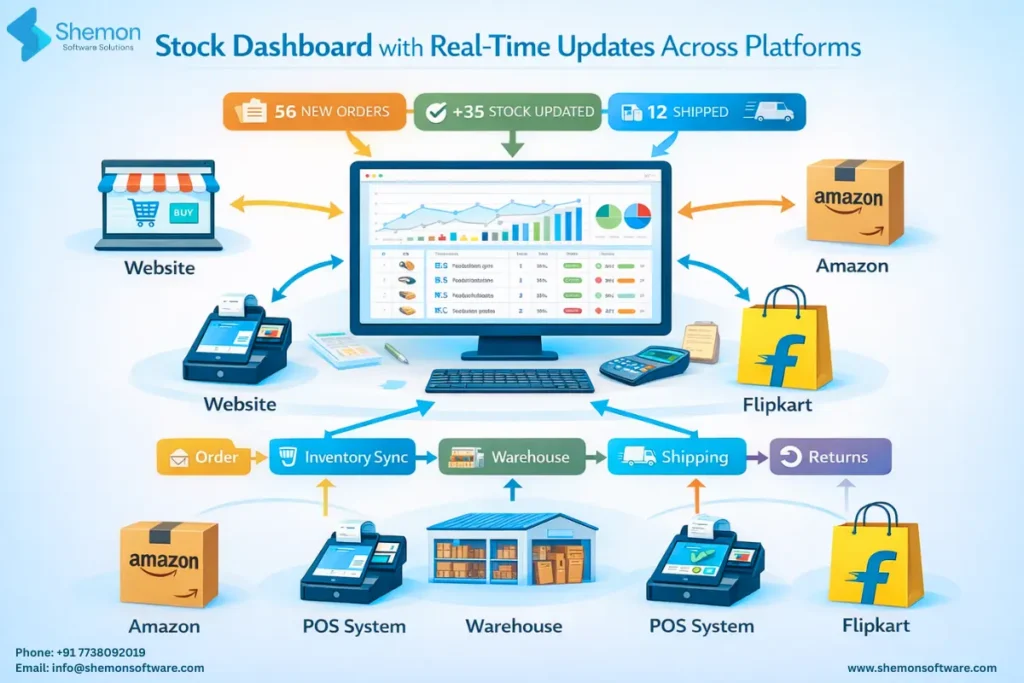
Running an online retail business today is not as simple as listing products and waiting for orders. Behind every successful e-commerce store is a web of processes, managing stock across multiple platforms, processing orders without delays, coordinating between warehouse teams, and keeping customers happy. If even one of these breaks down, the impact on revenue and reputation is immediate. This is exactly where e-commerce workflow software steps in. It connects all these moving parts into one structured, automated system, so nothing falls through the cracks.
In 2026, retail businesses that are still managing their operations through spreadsheets, WhatsApp messages, and disconnected tools are losing money, slowly but surely. Order delays, stock mismatches, and missed follow-ups are not just operational hiccups. They are business risks. And the solution is not to work harder. It is to work smarter, with the right software.
Why Retail Operations Are Getting More Complex Every Year?
The retail landscape has changed dramatically. Customers today expect same-day updates, seamless returns, and consistent product availability, whether they are buying from your website, a marketplace like Amazon or Flipkart, or a physical store. Managing all of this simultaneously, without a unified system, is nearly impossible.
Here is what most retail businesses are dealing with right now:
- Inventory updated in one place but not another, leading to overselling or stockouts
- Orders coming in from multiple channels with no single place to track them
- Manual payment reconciliation eating up hours every week
- No real-time visibility on which products are performing and which are not
- Customer data scattered across tools, making personalisation nearly impossible
Without solving these, no amount of marketing spend or product expansion will save a retail business from bleeding efficiency and revenue.
What Exactly Is E-Commerce Workflow Software?
E-commerce workflow software is a custom-built or platform-based system that connects and automates the core operational processes of an online retail business. Think of it as the backbone of your operations; it handles everything from the moment a customer places an order to the time it reaches their door and beyond.
It is not just software. It is a structured operational system that replaces the chaos of disconnected tools with a single, accountable workflow. It covers:
- Product cataloguing and inventory management
- Order capture and tracking across all sales channels
- Warehouse and fulfilment coordination
- Payment and settlement reconciliation
- Returns and refund handling
- Customer data and retention tracking
Businesses from small D2C brands to large multi-channel retailers use this kind of software to stay on top of growing complexity without hiring more people for every new function.
From Order to Delivery: How the Workflow Flows
Understanding how e-commerce workflow software functions helps you see why it is so powerful. Here is a simplified breakdown of the process:
- Step 1 – Order Comes In
A customer places an order on your website, Flipkart, or any other connected marketplace. The system captures it automatically.
- Step 2 – Inventory Syncs Instantly
Stock levels update across all channels in real time. No more overselling out-of-stock products.
- Step 3 – Warehouse Gets Notified
The fulfilment team receives an automated task to pick, pack, and ship the item. No manual email or WhatsApp needed.
- Step 4 – Customer Gets Updates
Order status notifications go out automatically at each stage: confirmed, packed, shipped, and delivered.
- Step 5 – Payment Is Reconciled
Revenue from the sale is automatically logged, matched with the marketplace payout, and flagged for any discrepancies.
- Step 6 – Returns Are Tracked
If the customer raises a return, it goes through an automated process; no manual follow-up is needed from the operations team.
The result? Your team spends less time chasing information and more time making decisions that grow the business.
Why Retail Businesses Are Moving Towards Automation?
Operational Benefits
- Zero stock mismatches, inventory is always accurate across platforms
- Faster order fulfilment because tasks are assigned automatically
- Fewer human errors in data entry and order tracking
- Teams across warehouse, operations, and finance work from a single system
Cost and Efficiency Benefits
- Reduced need for manual follow-up staff for routine tasks
- Lower revenue leakage from missed payments or untracked returns
- Real-time dashboards replace hours of manual reporting
- Scale operations without proportionally scaling headcount
Customer Experience Benefits
- Faster deliveries because fulfilment is structured and accountable
- Accurate order updates build trust and reduce customer service load
- Seamless return handling improves repeat purchase rates
A Practical Guide to Setting Up Retail Workflow Automation
Getting started with workflow automation for retail does not have to be overwhelming. Here is a clear, practical approach:
- Map Your Current Workflows First
Sit down with your operations, warehouse, and finance teams. Document exactly how things work today, where orders come in, who handles what, and where the biggest delays or errors are. This clarity is essential before any system is built.
- Identify the Integration Points
What platforms are you selling on? What payment gateways do you use? What ERP or accounting tools are in place? The workflow software needs to connect with all of these to eliminate manual data transfer.
- Define Roles and Approvals
Who should receive what notification? Who approves a refund? Who flags a delayed shipment? Defining this upfront ensures the system enforces accountability automatically.
- Build the Centralised Order Management Layer First
The order management system e-commerce is typically the highest-impact starting point. Once orders are centralised, inventory sync and payment reconciliation follow naturally.
- Train Teams and Measure Adoption
Software only works if people use it. Run a structured onboarding, monitor adoption closely in the first 30 days, and adjust based on real team feedback.
A Real Example: How Retail Operations Can Be Transformed with the Right System
A growing retail distributor was operating primarily offline and struggling to manage orders, inventory, and financial reconciliation across multiple channels. As the business expanded into both B2B and B2C sales, the complexity increased significantly.
This is where Shemon Software Solutions stepped in.
Shemon built a custom e-commerce platform along with an automated order management system tailored to their workflows. The system connected all sales channels, synced inventory in real time, and integrated directly with accounting software for seamless financial tracking.
What changed:
- End-to-end operations became visible in a single dashboard
- Manual effort has been reduced significantly across teams
- Inventory mismatches and revenue leakage were minimised
- Order processing became faster and more structured
Most importantly, the business now has the right infrastructure to scale without operational chaos.
This is not a one-off success story. It’s what happens when retail operations automation is implemented the right way, built around actual business workflows, not forced into a generic system.
Bringing It All Together: The Future of Retail Is Automated and Connected
The retailers winning in 2026 are not necessarily the ones with the best products, but the ones with structured, accountable, and automated operations behind the scenes. When inventory, orders, fulfilment, payments, and customer data are all connected within a single system, the entire business runs more smoothly, with less effort and fewer errors.
If you are still relying on spreadsheets and fragmented tools to manage your retail operations, the hidden cost in time, errors, and missed revenue is higher than you might realise. The right e-commerce workflow software doesn’t just solve today’s challenges-it builds a strong operational foundation that allows your business to scale confidently into the future.
FAQs
Yes. A well-built e-commerce workflow system creates real-time inventory sync across all channels, website, Amazon, Flipkart, and offline POS, so stock is always accurate everywhere.
Absolutely. Even small businesses benefit from automation by saving time, reducing errors, and building a strong operational foundation for future growth.
Absolutely. Reputable systems are built with role-based access controls, secure data handling, and audit-ready logs. Only authorised team members can access financial dashboards or settlement data.
It depends on the complexity of your operations and the number of integrations required. A focused MVP can typically be live in 6–10 weeks. Shemon follows a structured, phased rollout to ensure teams can adopt the system without disruption.
Yes. Retail workflow software can be built to handle different pricing structures, order workflows, approval layers, and customer communication flows for both B2B and B2C channels, often within the same system.
Tags
E-commerce workflow software
Workflow automation for retail


