
Recruitment Management Software: Features, Benefits and Uses
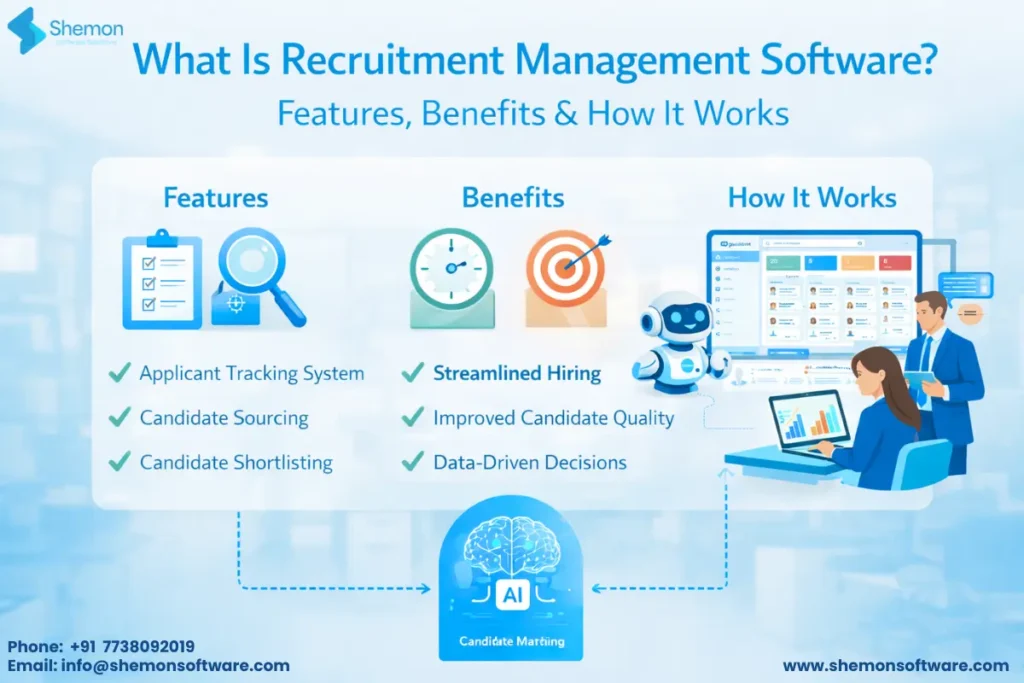
One of the most crucial tasks for every company is hiring the right personnel. To manage hiring operations, many HR departments still use spreadsheets, emails, and manual follow-ups. This is where the use of recruitment management software becomes critical. It helps teams cut down on manual labour and concentrate more on choosing the finest candidates by consolidating the entire hiring process into a single, well-organised platform.
What Is Recruitment Management Software?
Recruitment management software is a digital platform that helps businesses manage end-to-end hiring workflows. It covers everything from posting a job opening to onboarding a selected candidate. Additionally, it removes the guesswork from hiring by giving HR teams a clear, structured view of every open position and every candidate in the pipeline.
Instead of switching between multiple tools or chasing updates over email, recruiters get one central system where all information lives. Therefore, decisions are faster, communication is cleaner, and no candidate falls through the cracks.
How Does a Recruitment Management System Work?
A recruitment management system follows a step-by-step process that mirrors your actual hiring workflow. Here is how it typically works:
- Job posting – HR creates a job opening inside the system. The posting can be pushed to multiple job boards automatically.
- Application collection – All applications come into one inbox. No more scattered emails or missing CVs.
- Candidate screening – The system filters applicants based on criteria you define. This saves hours of manual review.
- Interview scheduling – Coordinators can schedule interviews directly within the platform. Automated reminders go out to candidates and interviewers.
- Feedback and shortlisting – Hiring managers add their feedback in the system. The team can collaborate and shortlist candidates together.
- Offer and onboarding – Once a candidate is selected, the offer letter process begins within the same platform.
This structured flow means every stakeholder knows exactly what stage each candidate is at, at any point in time.
Key Features to Look for in Recruitment Software for HR
When choosing recruitment software for HR, it is important to focus on features that solve your real problems. Here are the must-have capabilities:
- Centralised Candidate Database
All applicant profiles, resumes, interview notes, and communication history should be stored in one place. This makes it easy to search, filter, and revisit past candidates for future roles.
- Job Board Integration
Good hiring management software connects with popular job portals so you can post openings without logging into multiple platforms. It also pulls all applications back automatically.
- Automated Screening and Filtering
The system can screen resumes based on skills, experience, or keywords. Moreover, it helps your team focus only on qualified candidates instead of reading through hundreds of irrelevant applications.
- Interview Management
Scheduling interviews manually wastes time. The software handles interview scheduling, sends reminders, and allows interviewers to share feedback within the platform.
- Reporting and Analytics
You should be able to see how long each stage takes, where candidates are dropping off, and how your overall hiring performance looks. Additionally, these reports help you make better decisions over time.
- Communication Tools
Built-in messaging or email integration keeps all candidate communication in one thread. This avoids confusion and ensures no follow-up is missed.
Benefits of Using an Applicant Tracking System
An applicant tracking system does more than just organise resumes. It transforms the way your HR team operates. Here are the real benefits businesses experience:
- Faster hiring – Automated workflows reduce the time spent on repetitive tasks. Your team can fill positions much more quickly than before.
- Better candidate experience – Timely communication and structured follow-ups leave a positive impression on candidates, even those who are not selected.
- Reduced hiring errors – With all information documented and tracked, you reduce the risk of overlooking important details or making decisions based on incomplete data.
- Team collaboration – Multiple stakeholders can review, comment, and collaborate on hiring decisions within the platform. Therefore, alignment becomes much easier.
- Cost savings – Faster hiring and fewer manual errors directly reduce your cost per hire over time.
- Compliance and documentation – All hiring activity is recorded and traceable, which is important for audits and HR compliance requirements.
Who Benefits from HR Recruitment Software?
HR recruitment software is useful across multiple roles and business sizes. However, the need becomes more urgent as a team grows:
- HR managers who need visibility over multiple open positions at once
- Recruiters who handle large volumes of applications regularly
- Hiring managers who want to give structured feedback without lengthy email chains
- Business owners who want hiring to happen faster without sacrificing quality
- Recruitment agencies that manage hiring for multiple clients simultaneously
Whether you are a growing startup or an established enterprise, the right system scales with your needs.
Why Choose Shemon Software Solutions for Your Recruitment Needs?
Shemon offers a purpose-built RMS. It is designed for HR teams and recruitment agencies. Here is what makes Shemon different:
- Centralised Candidate Database – All candidate profiles, resumes, and communication history stored in one searchable place.
- Job / Mandate Management – Create and manage multiple job openings or client mandates from a single dashboard.
- Resume Sourcing – Source resumes from multiple channels and have them flow directly into the system.
- AI Matching and Shortlisting – Automatically matches and shortlists the most relevant candidates based on skills and experience.
- Interview Pipeline Tracking – Track every candidate across each interview stage in real time so nothing gets missed.
- Recruiter Activity and Performance Tracking – Monitor recruiter output and performance through clear, actionable reports.
- Workflow Automation – Repetitive tasks like follow-ups, reminders, and status updates are handled automatically.
- Role-Based Access – Each team member sees only what is relevant to their role, keeping data secure and clean.
- Real-Time Dashboards – Live dashboards give hiring managers and leaders accurate visibility at every stage.
Managing hiring through disconnected tools often leads to delays, missed communication, and poor candidate experiences. Recruitment management software solves this problem by bringing the entire hiring workflow into one structured and trackable system.
With advanced automation, AI-based candidate matching, and real-time dashboards, Shemon helps HR teams simplify recruitment and improve hiring outcomes. If your organisation is looking to modernise its hiring process, Shemon Software Solutions provides a powerful and scalable recruitment management system designed for growing businesses.
FAQs
A recruitment management system covers the full hiring cycle, including job posting, communication, scheduling, and onboarding. An applicant tracking system primarily focuses on tracking and managing candidate applications. Many modern tools combine both functions into one platform.
Yes. Small and mid-sized businesses benefit greatly because they often have small HR teams managing multiple roles simultaneously. The software reduces manual workload and speeds up hiring even with a lean team.
Modern platforms, including Shemon's Recruit OS, support WhatsApp, email, and calling integrations. This means all candidate communication happens in one connected system.
The timeline depends on the complexity of your requirements. However, a well-scoped system can typically be delivered within a few weeks, especially when the provider understands your workflow clearly from the start.
Yes. Reputable platforms use enterprise-grade security to protect candidate data, ensure compliance, and maintain confidentiality across all hiring records.
Tags
Recruitment management software
Recruitment management software


