
How Recruitment Automation Software Helps Teams Hire Smarter
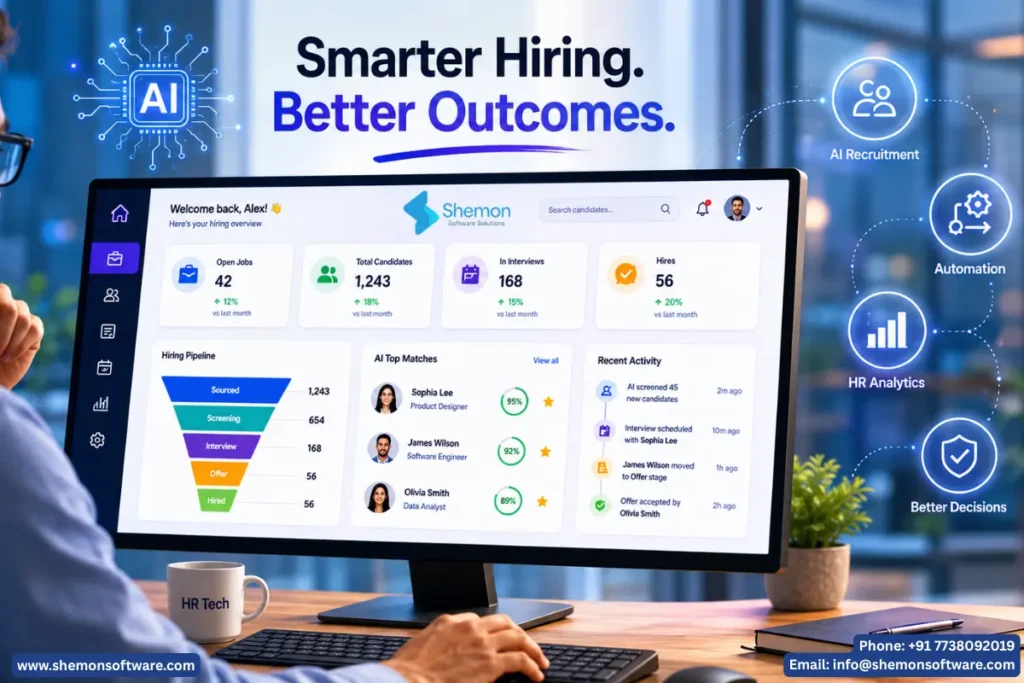
The best thing that can happen to a hiring team is not finding the perfect candidate. It has a system that helps them find the perfect candidate faster, with less effort, and with nothing falling through the cracks.
That is exactly what recruitment automation software makes possible. And the numbers back this up. The global recruiting automation software market is valued at USD 1.3 billion in 2026 and is projected to double to USD 2.8 billion by 2035. Recruitment teams everywhere are moving toward smarter systems, and the results are showing up in real, measurable ways.
Where Hiring Teams Actually Spend Their Time (And What Can Change)
Before we talk about automation, let us talk about what takes up a recruiter’s day. Most of it is not deep work. It is coordination. Sending follow-up emails. Searching for a CV that was “definitely in the inbox somewhere.” Updating a spreadsheet. Scheduling a call. Reminding a manager to give feedback.
None of that is the part of recruiting that requires skill. It is the part that eats time.
AI-powered tools can rank candidates four times faster than humans, and ATS systems help chop hiring cycles by as much as 60%. That is not a small improvement. That is hours returned to every recruiter, every week.
So What Is Recruitment Automation Software?
At its core, automated hiring software is a platform that handles the repetitive steps in your hiring process so your team can focus on the human side of recruiting: conversations, relationships, and decisions.
Think of it as a well-organised system that sits behind your team and keeps everything moving without anyone having to chase it.
Here is what a good system typically handles:
- Receiving and organising job mandates from clients or hiring managers
- Storing all candidate profiles in one searchable, structured database
- Automatically parsing and sorting resumes based on skills and requirements
- Tracking each candidate across every stage of the hiring pipeline
- Sending updates and follow-ups at the right time
- Giving recruiters and managers a live view of what is open, what is moving, and what needs attention.
Manual Recruitment vs Recruitment Automation Software
| Manual Hiring | Automated Hiring |
| Spreadsheet tracking | Centralized dashboard |
| Manual follow-ups | Automated reminders |
| Slow screening | AI candidate matching |
| Higher hiring delays | Faster hiring cycle |
The AI Layer: Why It Matters More Than Ever
One of the biggest shifts in recruitment right now is the addition of AI recruitment software into the workflow. This is not about replacing recruiters. It is about giving them a powerful assistant that does the repetitive analysis.
90% of recruiters using AI-driven sourcing tools reported significant improvements in time-to-hire, and 70% of those automating screening and shortlisting saw an uptick in candidate quality. Recruit CRM
Here is what AI specifically helps with inside a recruitment system:
- Resume parsing – Reading and extracting key information from hundreds of CVs automatically
- Candidate matching – Scoring how well a profile fits a specific role based on skills, experience, and requirements
- Shortlist summaries – Giving recruiters a quick, readable summary of each candidate instead of making them read every CV from scratch
- Pattern recognition – Identifying which types of candidates tend to progress further in your specific pipeline
67% of hiring decision-makers say AI’s main benefit is saving time, and 89% of HR professionals using AI say it significantly saves time or increases efficiency.
What a Recruitment Management System Looks Like in Practice
Shemon’s Recruit OS is built specifically for recruitment agencies, corporate HR teams, staffing firms, and high-volume hiring operations. It is not a generic tool. It is configured to how your team actually works.
A recruitment management system like this brings everything together in one place:
- One centralised candidate database with smart search by skills, location, experience, and tags – no duplicates, no lost profiles
- Mandate tracking from start to finish – every client request has a clear status visible to everyone on the team
- Stage-wise pipeline view – see exactly where each candidate sits without sending a single “any update?” message
- Role-based access – recruiters see their own pipeline, managers see the full picture
- Integrated communication – WhatsApp, email, and calling tools connect directly so every interaction is logged automatically
- Live dashboards and reports – no more building a report from scratch before every client call
This is what HR recruitment software looks like when it is designed around actual hiring workflows instead of around a product checklist.
The Real Benefits: Simple and Measurable
People often talk about automation in vague terms. Let us keep it specific.
Companies using ATS cut hiring costs by $7,000 per role on average, and 75% of recruiters say these tools reduce time-to-hire by 30% or more. RecruiterFlow
Beyond cost and speed, here is what teams consistently report after moving to recruitment workflow automation:
- Recruiters spend more time talking to candidates and less time managing data
- Managers get clear visibility without needing to ask for updates
- Client reporting becomes faster and more accurate
- New roles get filled in shorter cycles because nothing waits on manual follow-up
- The team scales without adding headcount just to manage the admin
Organizations with automated onboarding improve new hire retention by 82% and productivity by over 70%. The impact of automation does not stop at the offer letter. It continues into how new hires are brought in and settled.
Who Gets the Most Out of This
AI-powered recruitment solutions work across many types of hiring operations. But they deliver the biggest impact for:
- Recruitment agencies managing multiple clients and mandates at once – one dashboard, full visibility across all of them
- Corporate HR teams handling internal hiring requests with multiple stakeholders and approval layers
- Staffing and manpower firms running high-volume hiring were losing track of one candidate means losing a placement
- Growing businesses that want their hiring process to scale without becoming harder to manage
The common thread across all of them is this: the system brings structure, and structure brings speed.
FAQs
No. It handles the repetitive and administrative parts of the process. Recruiters still make every important decision. They just make those decisions with better information and more time.
Yes. A well-built system scales both ways. It helps a small team stay organised and a large team stay connected.
With Shemon's implementation approach, the process is structured in clear stages: understanding your workflow, configuring the system, testing with real scenarios, and going live with team training. Teams see progress at every step.
Common integrations include WhatsApp, email, calling tools, CRM and ERP systems, accounting platforms, and internal dashboards.
The Future of Hiring Is Already Here. Are You Part of It?
Hiring has always been about finding the right person for the right role. What changes with a smart recruitment system is everything around that core task – the search, the tracking, the coordination, the reporting – all of it becomes faster and cleaner.
Recruitment automation is no longer optional for growing businesses. Teams that automate repetitive hiring tasks can hire faster, improve candidate experience, and scale operations without increasing manual workload
Tags
Recruitment Automation Software
Recruitment workflow automation


