
How Custom Software Application Development Drives Business Success
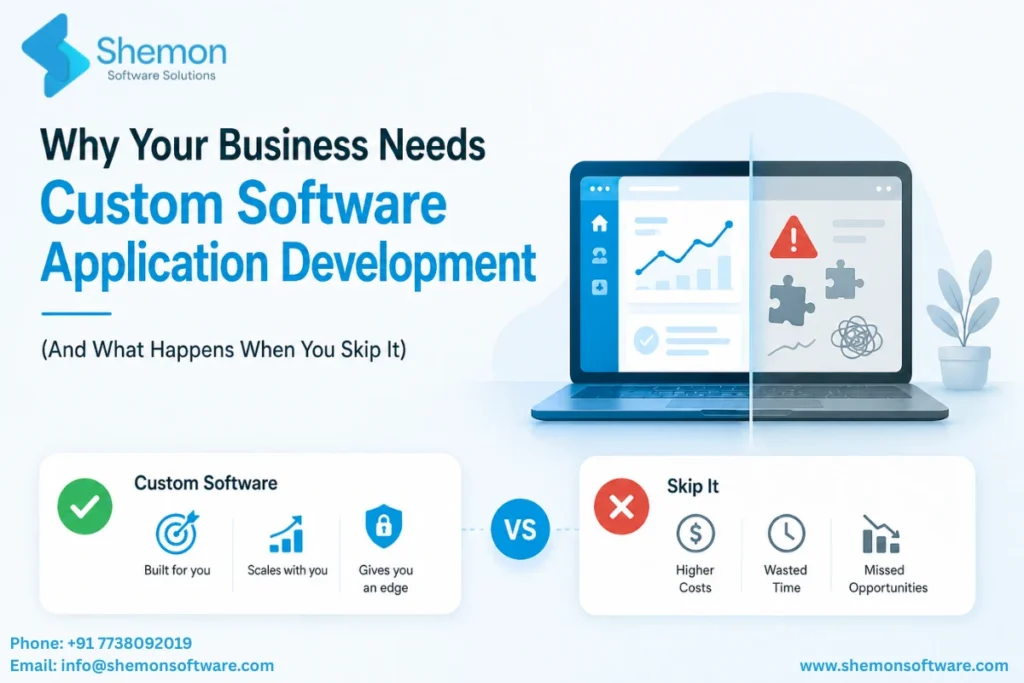
Every business reaches a point where spreadsheets stop working. Where tools that were “good enough” start slowing your team down. Where you are paying for five different software subscriptions, and none of them talks to each other. That is exactly where custom software application development steps in, not as a luxury, but as a practical solution to real operational problems.
The software you use every day shapes how your business runs. When it fits poorly, everything downstream suffers.
The Off-the-Shelf Problem Nobody Talks About
Generic software is built for the average business. But your business is not average. You have your own workflows, your own customer base, your own way of doing things. When you force your processes into someone else’s template, you end up bending your operations to fit the tool instead of the other way around.
The risks are real:
- Paying for features you never use
- Missing features your team actually needs
- Poor integration with your existing systems
- No control over updates, pricing, or data ownership
- Slower teams spend time working around software limitations
These are not small inconveniences. Over time, they add up to lost revenue, frustrated employees, and customers who feel the friction.
So What Exactly Is Custom Software Application Development?
At its core, it is the process of designing and building software from scratch, tailored entirely to the way your business operates. Unlike off-the-shelf products, custom applications are built around your processes, your users, and your goals.
This can take many forms depending on what you need:
- Web application development for browser-based tools that your team or clients can access from anywhere
- Mobile custom app development for iOS and Android experiences built for your specific audience
- Enterprise software development for large-scale internal platforms that connect departments, automate approvals, and centralise data
- SaaS application development for startups and product teams building scalable subscription software
- Cross-platform custom apps that work seamlessly across both web and mobile without duplicating development effort
Custom does not mean complicated. It means built with intent.
How the Development Process Actually Works?
Here is how a quality custom software project typically moves from idea to working product:
Step 1 – Discovery and Scoping
This is where everything is mapped out. What problem are you solving? Who will use the app? What does success look like? A good development partner will push back, ask hard questions, and define the scope before writing a single line of code.
Step 2 – Design and Prototyping
Before building, you should see what you are building. Wireframes and prototypes help you validate the idea early, when changes are cheap and easy.
Step 3 – Development in Sprints
Rather than disappearing for months and returning with a finished product, good teams build in short sprints. You see progress regularly, give feedback, and stay in control throughout.
Step 4 – Testing
Real testing, not just “it worked on my machine.” Quality assurance covers edge cases, performance under load, security vulnerabilities, and user experience.
Step 5 – Launch and Iteration
Going live is not the end. The best custom software grows with your business. New features, better performance, and refinements come from using the product in the real world.
What You Actually Gain From Going Custom?
Let us be specific about the benefits, not vague promises:
Operational benefits: Automate repetitive tasks that currently eat hours every week
- Give your team one clean system instead of five disconnected tools
- Build exactly the reports and dashboards you need, not the ones a vendor thought you might
Business growth benefits:
- Scale the software as your business grows, without switching platforms
- Build in the integrations your team actually uses (CRM, accounting, HR tools)
- Own your software and your data completely
Competitive benefits:
- No competitor using the same off-the-shelf tool can replicate your workflows
- Move faster because your tech fits your team, not the other way around
A Quick Guide: When Should You Go Custom?
Not every business needs a fully custom application. Here is a simple way to think about it:
You should consider custom development when:
- Your team is spending significant time on manual workarounds
- You cannot find a tool that covers more than 70% of what you need
- Your operations are complex enough that generic software creates compliance or data risks
- You are building a product or platform to sell to others
- You need deep integration between systems that do not natively connect
You might be fine with off-the-shelf when:
- Your needs are simple and standard
- You are in early-stage testing and need something fast to validate an idea
Why Shemon Approaches This Differently?
At Shemon Software Solutions, we do not hand you a template and call it custom. We start by understanding your operations deeply, then build software that fits the way your team actually works.
Whether it is a web portal for your clients, a mobile app for your field staff, an internal enterprise platform, or a full SaaS product, the process stays the same: no guesswork, no unnecessary complexity, just software that solves the problem.
We have worked across industries including healthcare, recruitment, manufacturing, education, and e-commerce. That breadth means we have seen what works at scale and what causes problems later.
What makes Shemon different:
- We define the problem before we write the solution
- You stay in the loop through every sprint, not just at the end
- We build for growth, so your software does not need replacing in two years
- We handle the full picture: development, integration, testing, and support
Stop Fitting Your Business Into Someone Else's Box
The tools you use should serve your business, not the other way around. Custom software application development is how growing businesses take back control of their operations, their data, and their growth.
If your current software is creating friction instead of removing it, it is worth a conversation.
FAQs
It depends on the complexity. A focused internal tool might be ready in 8 to 12 weeks. A full SaaS platform with multiple user roles and integrations can take 4 to 8 months. The discovery phase helps give you a realistic timeline before any commitment.
Not at all. Startups, growing mid-sized businesses, and even solo-founder companies benefit from custom applications, especially when building a product or when generic tools are slowing operations down.
Good software does not stop at launch. You will need updates, occasional bug fixes, new features as your business evolves, and someone to call when something unexpected happens. Make sure your development partner offers post-launch support.
The upfront cost is higher, but the total cost of ownership often works out lower. You stop paying recurring subscriptions for tools that only half-fit your needs, and you avoid the hidden cost of manual workarounds your team spends hours on every week.
Yes. Most successful custom software starts with a Minimal Viable Product (MVP) – just the core features you need today. We build in sprints so you can launch quickly and add functionality over time.
Tags
Custom Software Application Development
Custom Software


