
Benefits of Custom Healthcare Software Development for Hospitals
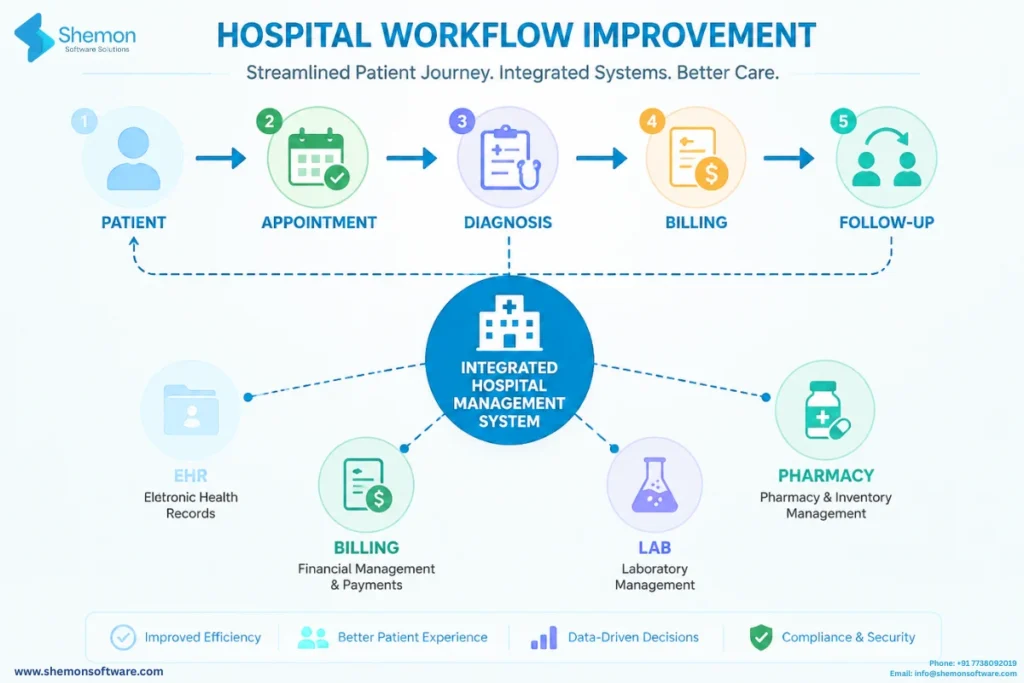
Custom healthcare software development is fixing one of the most frustrating problems in modern medicine, and it has nothing to do with clinical skills. It has everything to do with the software healthcare teams are forced to use every single day.
Think about it. A doctor finishes seeing a patient, types notes into one system, switches to another to check lab results, opens a third to process billing, and sends a message through a completely separate platform. By the time they are done, they have spent more time clicking between tabs than actually caring for patients.
This is the reality for thousands of healthcare providers right now. And it is completely fixable.
Healthcare Was Always Complicated. The Software Made It Worse
Nobody enters medicine to fill out forms. Yet somehow, that is what a huge chunk of the workday has become.
The problem is not the people. The problem is that most healthcare organisations are running on generic, off-the-shelf software that was built for everyone in general and no one in particular. It does not know your workflows. It does not understand your team structure. It cannot adapt to the way your hospital actually operates.
So what happens?
- Patient data lives in three different places, and nobody is fully sure which one is current
- New staff take weeks to learn a system that should take hours
- Reporting takes days because data has to be pulled manually from multiple sources
- Small inefficiencies quietly add up to enormous operational costs
The software was supposed to help. Instead, it became one more thing to manage.
What Custom Healthcare Software Actually Means
Here is the simplest way to understand it. Off-the-shelf software is like buying a suit off the rack. It fits most people okay. Custom healthcare software is the suit made for you, your measurements, your style, and your purpose.
It is built specifically for how your organisation works. Whether you run a small clinic, a multi-speciality hospital, a diagnostics lab, or a HealthTech startup, the software is designed around your real needs and not around what a product team in another country thought healthcare might look like.
It can cover:
- Patient management and electronic health records
- Appointment booking and teleconsultation
- Lab and pharmacy workflows
- Medical billing and insurance claims
- Real-time dashboards for hospital administrators
- Mobile apps for both patients and clinical staff
Because it is built for you, it connects all of these things in one place instead of scattering them across a dozen different tools.
How to Actually Build It Without the Confusion
Most people hear “custom software” and imagine something complicated, expensive, and years away from being ready. Understanding how to build healthcare software properly changes that picture completely.
The process is straightforward when done right:
- Start with the problem, not the technology – A good team will sit with your doctors, nurses, and admin staff to understand exactly what is not working before writing a single line of code.
- Design for real users – Screens and workflows are built for the people who will actually use them every day, not just for developers who understand backend systems.
- Build in stages – The most important features come first. You start seeing results early instead of waiting for a big launch that is always six months away.
- Test in real conditions – Not just technical testing. Real clinical workflow testing to make sure things work the way they need to inside an actual healthcare environment.
- Launch and keep improving – The first version goes live, and then it gets better based on real feedback from real users over time.
No confusing jargon. No unnecessary delays. Just a clear path from problem to working solution.
The Honest Benefits Nobody Talks About
Everyone lists the benefits of custom healthcare software in bullet points. Faster workflows, better data, improved patient outcomes. All true. But the honest benefit that rarely gets mentioned?
It gives your staff their time back.
When a nurse is not spending 20 minutes hunting for a patient file that should take 10 seconds to find, that time goes back to patient care. When a billing team is not manually reconciling records across two systems at the end of every month, that energy goes somewhere more valuable. When a doctor can pull up a complete patient history in one click, consultations become more focused and more accurate.
Other real benefits worth knowing:
- Fewer errors – Automated workflows leave far less room for human data entry mistakes
- Better compliance – Built-in features for HIPAA, HL7, FHIR, and local regulatory requirements from day one
- Scalability – As your organisation grows, the software grows alongside it without breaking
- Full ownership – You are not dependent on a vendor’s update schedule or sudden pricing changes
- Cleaner integration – It connects with the tools and equipment you already use instead of replacing everything overnight
What Smart Healthcare Organisations Are Already Doing?
The trends in healthcare software development right now point in a very clear direction. The organisations upgrading their platforms today are the ones that will handle what is coming next without scrambling. Here is what is already happening across the industry:
Artificial Intelligence is already in the clinic: Flagging abnormal test results automatically before a clinician even opens the file
- Predicting patient no-shows so appointment slots do not go to waste
- Automating clinical documentation so doctors spend less time typing and more time actually thinking
Telemedicine is now a patient expectation:
- It is no longer an emergency workaround built during a crisis
- Patients expect virtual consultations as a standard part of care, not a special feature
- Healthcare providers without a solid telemedicine setup are already falling behind
Wearables are changing how data flows:
- Live health data from patient devices is feeding directly into clinical dashboards
- Doctors can monitor patients between visits without waiting for the next appointment
- Early warning signals are being caught before they turn into emergencies
Interoperability has become the top priority:
- Large healthcare networks are making it their biggest focus right now
- Different systems need to share data cleanly and instantly with each other
- Siloed software is no longer acceptable when patient outcomes depend on speed and accuracy
Why Shemon Gets Healthcare Software Right?
Choosing a development partner for something as critical as healthcare software is not a small decision. A wrong choice does not just mean wasted budget. It can mean disrupted care, compliance gaps, and frustrated staff. This is exactly why we want to be straightforward about what working with Shemon actually looks like.
Here is what makes the difference:
- Understand healthcare before we write code. We have worked with HealthTech platforms, clinics, cardiology practices, therapy centers, pharmaceutical companies, and biotech startups. We know the regulatory environment, the workflows, and the pressure healthcare teams work under.
- Build for the people using it, not just the people buying it. A system is only as good as how willingly your staff adopts it. We design for real users, which means simpler screens, faster workflows, and far less training time.
- Connect what already exists. Most organizations cannot throw out everything and start fresh. Shemon builds software that integrates cleanly with your existing tools, legacy systems, and third-party platforms so the transition is smooth.
- Thinking long term, not just launch day. Healthcare needs change. New regulations come in. Teams grow. We build with scalability and adaptability in mind so the software remains useful years from now, not just on day one.
- We have real case studies, not just promises. From rebuilding a biotechnology company’s compromised website to developing platforms for pediatric therapy providers, our work across the healthcare space is visible and verifiable.
Shemon is not just a software company that occasionally works with healthcare clients. Healthcare is one of our core focus areas, and that depth of experience shows in every project we take on.
Good Care Needs Good Systems Behind It
Healthcare organizations are not struggling because their doctors are not skilled or their staff is not dedicated. They are struggling because the tools underneath all of that skill and dedication are quietly letting them down every single day.
Custom software does not fix everything overnight. But it removes the friction that is costing you time, money, and patient experience in ways that rarely show up on a single report but add up fast over months and years.
If your current system makes your team sigh every morning when they open it, that is the clearest sign something needs to change.
FAQs
Yes. Custom software is designed specifically to integrate with your existing tools, whether that is a legacy EHR, lab equipment software, insurance portals, or anything else currently in use.
Simpler platforms can be ready in 3 to 6 months. More complex systems take 9 to 18 months. Either way, you see working versions early in the process and not just at the very end.
Security is built in from the very start and not added as an afterthought. Encryption, access controls, audit trails, and full compliance with relevant data protection standards are all part of the foundation.
That is one of the biggest advantages of going custom. Because the software is built for you, adding new features later is planned from the beginning and keeps things straightforward.
Tags
Custom healthcare software development
Healthcare software development


